Troubleshooting a flat starts with a decision most drivers make by reflex: put the donut on and go. Sometimes that is exactly right. Sometimes the donut in the trunk is flatter than the tire it would replace, older than the car, or being asked to cover a distance it was never rated for. This walkthrough for Kannapolis drivers starts at the flat itself and works, symptom by symptom, to the right ending: donut and drive, repair in place, or call for a tow.
The temporary spare's rules frame everything that follows. Most donuts are rated to 50 miles per hour and roughly 50 to 70 miles total, and they need around 60 psi to do even that much work. Any plan that exceeds those numbers is not a plan; it is a second problem scheduled inside the first one.
Symptom one: one flat tire, daylight, safe place to stop
This is the donut's home turf. Check the spare before you jack anything: press it, look for cracking or damage, and check its pressure if you carry a gauge. A spare showing sidewall cracks, a bulge, or pressure far below its sidewall figure should stop the job here. If the spare is sound, change the tire on level ground away from traffic, tighten the lug nuts in a star pattern, lower the car, and re-tighten. Then drive the donut the way it asks to be driven: under 50, gentle on corners and brakes, straight to a repair shop, not to the rest of the day's errands list.
Symptom two: the spare itself is flat or ancient
A spare that has sat untouched for eight years is flat more often than not, and rubber that old has aged whether it has rolled or not; most manufacturers treat tires past about 10 years as done regardless of tread. Your options narrow honestly here. If the original flat is a simple puncture and you carry an inflator kit, it may hold air long enough for a slow, short drive to help. If not, this is a tow, and it is not a failure of preparation so much as the predictable result of a part nobody inspects. Put a spare pressure check on the same mental list as oil checks after this, twice a year at minimum.
- Make the scene safe first. Pull well off the road, set hazards, and place the car on firm, level ground before opening the trunk.
- Inspect the flat. A nail or screw in the tread is repairable later. A torn sidewall, a bent wheel, or damage from driving on the flat means replacement.
- Inspect the spare before the jack. Pressure near its sidewall figure, no cracks, bulges, or dry rot. A bad spare ends the change before it starts.
- Change it by the book. Break the lugs loose before lifting, jack at the manual's lift point, star-pattern tightening, and a re-torque after lowering.
- Decide the drive. Within the donut's speed and distance limits to a shop is a go. Beyond them, or with a second tire low, the tow is the right call.
- Close the loop. Get the flat repaired or replaced promptly, return the donut to the trunk at full pressure, and note the spare's age for replacement.
Symptom three: the flat happened far from home
Distance is where donut plans quietly break. A flat near Kannapolis with a shop across town fits the spare's range. A flat on a highway trip with 120 miles left does not, and the correct move is a tow or a stop at the first tire shop the donut can reach, to repair the real tire or replace it before continuing. Trying to stretch a donut across a full trip risks a blowout of a tire with no spare behind it, at which point the tow you were avoiding becomes the tow you are waiting for, in a worse spot, with a longer bill of consequences.
Symptom four: two tires down, or a damaged wheel
Road debris that takes one tire sometimes takes two, and a pothole hard enough to flatten a tire can bend the wheel so a repair will never seal. One spare cannot solve two flats, and no spare solves a wheel that will not hold air. This scenario is a tow from the start, and recognizing it early saves the time of a change you would have to undo. The same logic applies if the car sits too low to place the jack safely, or traffic makes the shoulder dangerous on a wet Piedmont night.
The repair at the end of the donut drive
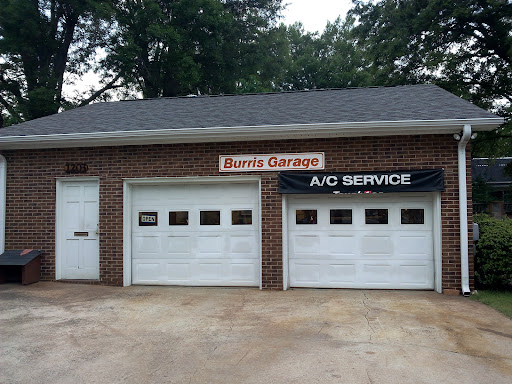
At the shop, a tread puncture from a nail or screw is usually repaired from the inside with a plug-patch, the only method that seals both the hole and the inner liner. Sidewall damage and run-flat damage end the tire's career. A place like Burris Garage will also check the spare you arrived on and inflate it to spec before it goes back in the trunk, which is the step that makes the next flat a fifteen-minute inconvenience instead of a repeat of this one.
Common questions
How fast and how far on the donut, exactly?
Most temporary spares are rated at a maximum of 50 mph for roughly 50 to 70 miles total. Your tire's sidewall and owner's manual carry the exact figures, and they override any general rule.
The spare looks brand new but it is 12 years old. Is it usable?
Treat it as expired. Rubber degrades with age even in a dark trunk, and manufacturers generally retire tires around 10 years. Replace the spare before you need it, not during the emergency.
Can I drive on the donut to work tomorrow and fix the flat this weekend?
That is the most common misuse there is. The donut is rated for a single short trip to a repair. A weekend of errands exceeds its design in both distance and duty, and risks a second failure with no spare left.
Photos in this guide are representative stock images.
← All guides from Burris Garage← Back to Burris Garage